Landscaping
Lawn Care
Irrigation Services
Flower Mound, Lewisville, Frisco, McKinney, Plano, TX & Nearby Texas Areas

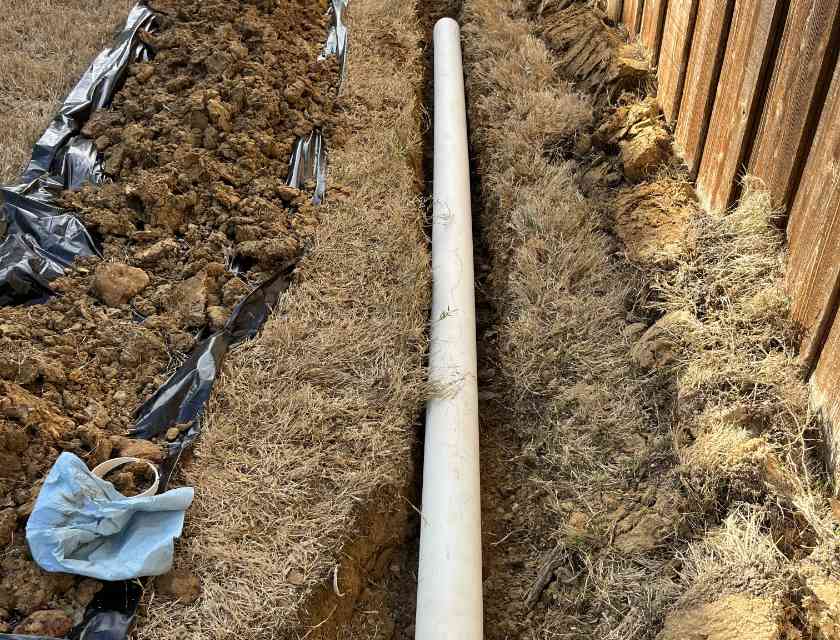
Water pooling in the yard after a rainstorm is a common problem for homeowners throughout the Dallas-Fort Worth area. Heavy clay soil, relatively flat lots, and seasonal downpours can prevent water from draining properly, leading to soggy lawns, erosion, and moisture collecting near foundations or patios. Understanding how a French drain works can help determine whether it is the right solution for improving drainage and protecting your property.
A French drain is one of several landscape drainage solutions designed to redirect excess water away from areas where it can cause damage. While it is highly effective in many situations, it is not the answer to every drainage issue. Knowing when a French drain is appropriate—and when another solution may work better—can help homeowners make informed decisions about managing water on their property.
A French drain is an underground drainage system that collects excess water and carries it away from problem areas before it can accumulate. Unlike surface drainage features, it works below ground by intercepting groundwater and allowing it to flow through a concealed drainage pipe. This makes it an effective option for yards that experience persistent moisture beneath the surface.
The system relies on gravity to move water from higher elevations to a designated discharge point. As water enters the trench, it flows through gravel surrounding a perforated pipe before continuing safely away from the landscape. Proper planning ensures the water leaves the property without creating new drainage concerns elsewhere.
Although designs vary depending on the property, most French drain systems include several essential components that work together to improve water drainage.
Each component serves a specific purpose, and the entire system must be installed correctly to function efficiently. Even a well-designed drainage pipe cannot perform as intended if the surrounding materials or grading are incorrect.
French drains collect water that has already soaked into the ground rather than simply moving surface water. As groundwater enters the gravel trench, it naturally flows toward the perforated pipe because it offers the path of least resistance. Gravity then carries the water toward the discharge location, reducing saturation around the affected area.
This continuous movement helps minimize standing water while reducing prolonged moisture around foundations, patios, walkways, and planting beds. By controlling underground water movement, a French drain can improve overall landscape drainage and reduce the risk of long-term water damage.
North Texas properties often experience drainage issues because of the region’s expansive clay soil. Clay absorbs water slowly and can remain saturated long after rainfall has ended, allowing water to collect where it is not wanted. Combined with relatively flat terrain, this creates conditions where drainage problems become recurring rather than temporary.
Recognizing these common issues can help determine whether a French drain system may be an effective solution.
Clay soil has very small particles that limit how quickly water can move through the ground. Instead of draining downward efficiently, water often remains near the surface and gradually saturates the surrounding landscape. This prolonged moisture can damage lawns and create muddy conditions that persist for several days.
As the soil expands and contracts with changing moisture levels, it may also contribute to movement around hardscapes and foundations. Effective water management helps reduce these risks by directing excess moisture away before it accumulates.
Water collecting beside a home’s foundation is one of the most concerning drainage problems homeowners encounter. Persistent moisture can increase hydrostatic pressure against foundation walls and contribute to soil movement around the structure. While every situation is unique, preventing water from remaining near the foundation is an important part of long-term property maintenance.
Pooling water around patios and walkways can also shorten the lifespan of outdoor living spaces. Constant moisture may encourage erosion, create slippery surfaces, and damage surrounding landscaping over time.
Many neighborhoods throughout the DFW area were developed on relatively level lots. Without sufficient slope, rainwater may have nowhere to flow naturally, causing it to linger in low spots after storms. Even moderate rainfall can create noticeable standing water when the landscape lacks proper drainage.
This challenge is especially common in newer residential developments where lots are designed with minimal elevation changes. While flat yards can make outdoor spaces easier to use, they often require carefully planned drainage systems to prevent water from remaining in low-lying areas after periods of heavy rain.
A French drain may help address these issues by providing an underground pathway for water that otherwise remains trapped. However, the property’s overall grading should always be evaluated before selecting a drainage solution.
Lawns that stay wet for several days after rainfall often indicate poor yard drainage. Saturated soil can weaken grass, encourage disease, and make outdoor spaces difficult to use. Repeated exposure to excess moisture may also damage landscape plants that prefer well-drained conditions.
When the underlying issue involves trapped groundwater, a French drain can help remove excess moisture below the surface. This allows the lawn to dry more consistently and promotes healthier growing conditions.
French drains are most effective when excess water is moving below the surface rather than simply flowing across it. They are commonly used where groundwater collects repeatedly and natural drainage is insufficient. Their ability to redirect hidden moisture makes them valuable for many North Texas properties.
Situations where a French drain may be appropriate include:
Not every drainage issue requires a French drain. In some cases, the source of excess water may be improperly directed downspouts, clogged gutters, irrigation system leaks, or landscaping that prevents water from flowing naturally away from the home. Correcting these issues may solve the problem without the need for an underground drainage system.
Some properties also experience multiple drainage issues at the same time. For example, a yard may benefit from improved grading along with a French drain to manage groundwater, while another property may require a catch basin to handle heavy surface runoff. Identifying the underlying cause of the drainage problem is the first step toward selecting the most effective long-term solution.
Every drainage problem is different, which means no single solution works for every property. Understanding the differences between common drainage methods helps homeowners choose an approach that addresses the actual cause of the problem instead of simply treating the symptoms.
Surface grading changes the slope of the landscape so water naturally flows away from structures. When poor grading is the primary issue, reshaping the yard may eliminate standing water without installing underground drainage. Proper grading often serves as the first step in improving overall drainage.
French drains become more useful when water remains trapped beneath the surface even after grading has been corrected. In many cases, grading and French drains work together rather than replacing one another.
Catch basins are designed to collect large amounts of surface runoff through a grated opening. They are particularly useful where water flows rapidly across driveways, patios, or paved surfaces during heavy rain. Once collected, the water is directed into underground piping for removal.
French drains serve a different purpose because they collect groundwater rather than large volumes of surface runoff. Selecting between the two depends largely on where the excess water is located.
Dry creek beds combine drainage with landscape design by creating shallow channels lined with decorative stone. They guide surface water across the yard while adding visual interest to the landscape. These systems work well when runoff remains visible above ground.
French drains operate below the surface and are generally preferred when groundwater is the primary concern. Some properties benefit from using both systems together to address different types of drainage issues.
Professional French drain installation begins with a thorough evaluation of the property and the source of the drainage problem. Contractors assess soil conditions, elevation changes, existing drainage patterns, and the most appropriate location for discharging collected water. This planning helps ensure the system addresses the underlying cause rather than simply relocating the problem.
Professionals also evaluate how rainfall moves across the property during heavy storms and identify areas where water naturally collects. They consider nearby structures, utility lines, existing landscaping, and local grading conditions to ensure the drainage system works effectively without creating new issues elsewhere on the property. Careful planning helps maximize the system’s performance while minimizing unnecessary disruption to the landscape.
Installation typically involves trench excavation, placement of filter fabric, installation of the perforated drainage pipe, and surrounding the pipe with clean gravel. The trench is then covered and restored so the drainage system remains largely hidden while continuing to function beneath the surface.
Before completing the project, professionals verify that water flows properly through the system and exits safely. They also consider nearby landscaping, utilities, and hardscape features to minimize disruption while protecting the property’s overall appearance.
Although installing a French drain may appear straightforward, successful performance depends on careful design and precise installation. Even small mistakes can reduce the system’s effectiveness or create entirely new drainage issues. Homeowners often discover these problems only after the next heavy rainfall.
Common DIY installation mistakes include:
A poorly installed French drain may clog prematurely, fail to collect groundwater, or discharge water into another area of the yard where it creates additional erosion or foundation moisture. Addressing drainage problems correctly the first time often helps avoid more extensive repairs in the future.
Every property has unique drainage conditions, and the most effective solution depends on understanding how water moves across and beneath the landscape. While French drains can resolve many common drainage problems in North Texas, they work best when designed around the property’s specific grading, soil conditions, and water flow patterns. To learn more about how professional French drain installation can help address drainage problems on your property, visit our French Drains service page. There, you’ll find additional information about the installation process, common drainage challenges, and solutions designed to help protect your landscape and foundation over the long term.