Landscaping
Lawn Care
Irrigation Services
Flower Mound, Lewisville, Frisco, McKinney, Plano, TX & Nearby Texas Areas

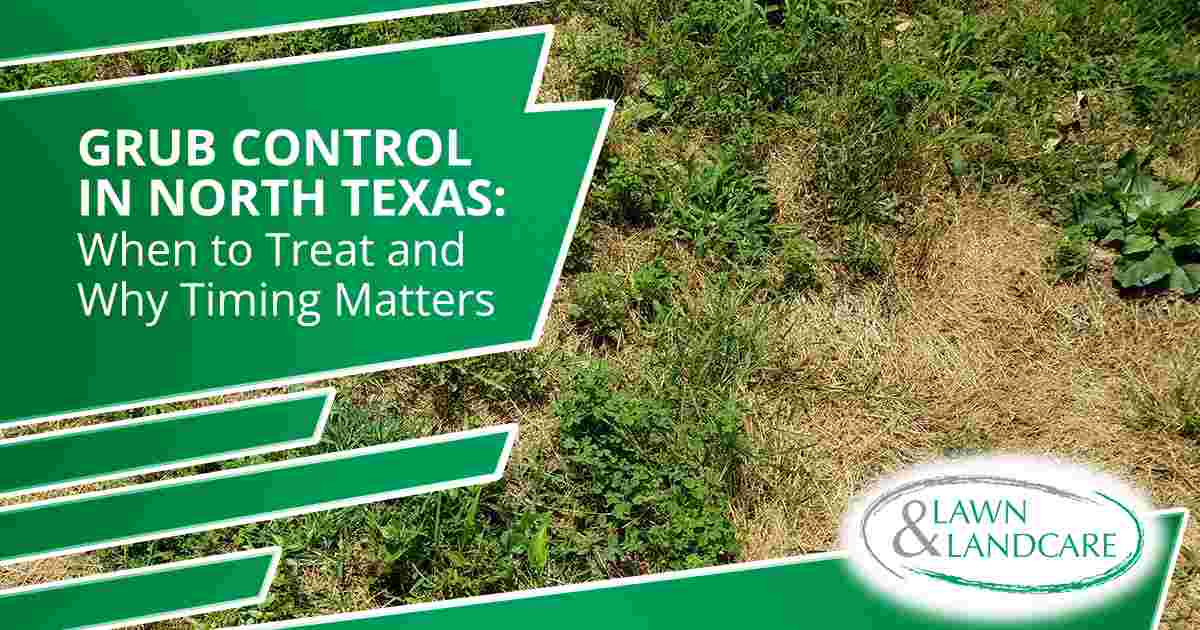
A healthy lawn depends on more than regular mowing and watering, as insects feeding beneath the soil can quietly weaken turf before visible symptoms appear. Lawn grubs are among the most destructive underground pests because they damage grass roots long before homeowners notice widespread browning or thinning. Understanding when to treat for grubs is one of the most important steps in protecting North Texas lawns throughout the growing season.
Lawn grubs are the immature, or larval, stage of several beetle species that develop beneath the soil surface. Common examples include larvae from June beetles and masked chafers, both of which are found throughout North Texas. These white, C-shaped grubs feed on turfgrass roots, reducing the lawn’s ability to absorb water and nutrients.
As grubs grow, they continue feeding on the root system that supports healthy grass. This feeding weakens the turf from below, often without obvious signs during the early stages of an infestation. By the time discoloration appears, significant root damage may have already occurred.
North Texas provides favorable conditions for grub development because of its long, warm growing season. Popular grasses such as bermudagrass, St. Augustine grass, and zoysia grass provide an ideal food source for developing larvae. Weather patterns, soil moisture, and beetle populations influence how severe infestations become from year to year.
Healthy lawns are not immune to grub problems because adult beetles naturally seek suitable locations for laying eggs. Periods of moderate moisture following warm temperatures often encourage successful egg development. As a result, homeowners may experience grub activity even when practicing consistent lawn maintenance.
Adult beetles typically become active during late spring and early summer, when they begin laying eggs in well-established lawns. Moist soil conditions help support egg survival and increase the likelihood of successful hatching. Although the adult beetles themselves rarely cause significant turf damage, their offspring create the problems homeowners eventually notice.
Eggs hatch within several weeks, allowing newly emerged grubs to begin feeding almost immediately. Because these young larvae are small and close to the soil surface, they are generally much easier to control than mature grubs. This early stage creates the best opportunity for effective preventive treatment.
After hatching, young grubs quickly feed on the fine roots that supply water and nutrients to the grass. Even though the feeding begins immediately, visible symptoms may remain limited while the root system gradually weakens. Damage often develops below the surface long before turf begins to decline.
Preventive grub treatments are designed to target these newly hatched larvae before extensive feeding occurs. Applying products during this window helps interrupt the life cycle while the insects are still highly susceptible. Proper timing greatly improves long-term lawn protection compared to waiting until visible damage develops.
After feeding through late summer and early fall, grubs gradually move deeper into the soil as temperatures decline. They overwinter beneath the surface before resuming development the following spring and eventually emerge as adult beetles to repeat the cycle. Understanding this seasonal pattern helps homeowners appreciate why preventive treatments are most effective before extensive root feeding begins.
As grubs mature, they become larger and more difficult to control with many available products. Continued feeding causes increasing damage to the lawn’s root system, reducing the grass’s ability to recover from summer heat and normal environmental stress. Turf may begin thinning rapidly as root loss becomes more severe.
Late-season treatments often produce less consistent results because mature grubs have already completed much of their feeding cycle. While curative products may still provide some control, they typically cannot reverse existing root damage. Acting early provides the greatest opportunity to prevent widespread turf decline.
Grub damage frequently appears as irregular brown patches that continue expanding despite regular watering. The affected grass may feel soft or spongy underfoot because much of the supporting root system has already been consumed. As damage progresses, sections of turf can often be lifted easily from the soil with little resistance.
Homeowners who inspect beneath damaged areas may find several white grubs just below the surface. Although discovering an occasional grub is normal, larger populations indicate an active infestation that deserves attention. Proper identification helps determine whether treatment is necessary or whether another issue is affecting the lawn.
Typical signs of grub damage include:
Grub damage is often mistaken for drought stress because both conditions produce brown, unhealthy-looking grass. However, drought-stressed lawns usually retain healthy roots and often recover after proper irrigation. Lawns damaged by grubs continue declining because the roots needed to absorb moisture have already been destroyed.
Lawn fungus and certain surface-feeding insects may also create similar symptoms. Chinch bugs, for example, damage grass blades rather than feeding below ground, while fungal diseases usually produce distinct discoloration patterns or lesions. Accurate diagnosis helps ensure the correct treatment is selected before unnecessary applications are made.
Skunks, raccoons, armadillos, and certain bird species may also dig into lawns while searching for grubs, creating additional damage beyond the feeding caused by the insects themselves. Wildlife activity can serve as another clue that a grub infestation may be developing beneath the surface.
The most effective grub control programs focus on prevention rather than repairing existing damage. Preventive applications are generally made from late spring through early summer, targeting young larvae shortly after eggs hatch. This treatment window allows products to work before extensive root feeding begins.
Preventive insecticides provide longer-lasting protection because they interrupt the grub life cycle during its most vulnerable stage. Applying treatments too early or too late may reduce their overall effectiveness depending on product selection and environmental conditions. Following seasonal timing recommendations helps maximize protection throughout the growing season.
Professional lawn care providers monitor seasonal conditions that influence beetle activity and grub development. This allows treatment schedules to be adjusted based on weather patterns instead of relying solely on calendar dates. Matching application timing with actual pest activity often produces more consistent results.
Curative grub treatments are intended for lawns where active infestations have already developed. These applications target larger grubs after feeding has begun, making product selection and application timing especially important. While curative treatments can reduce grub populations, they generally cannot restore roots that have already been consumed.
Lawns experiencing significant root loss may require additional care to encourage recovery after grub populations are controlled. Proper irrigation, balanced fertilization, and continued monitoring help support new root growth once feeding has stopped. Early intervention still provides the greatest opportunity to minimize lasting damage.
Many retail grub control products can be effective when used correctly, but timing remains one of the biggest challenges for homeowners. Applying the wrong product during the wrong stage of the grub life cycle often produces disappointing results even when directions are followed carefully. Without accurate identification, homeowners may also treat problems that are unrelated to grubs.
Professional lawn care providers evaluate turf conditions before recommending treatment. They consider factors such as the severity of the infestation, the stage of grub development, soil conditions, and the most appropriate control products. This approach helps ensure treatments address the underlying problem rather than simply reacting to visible symptoms.
Professionals also monitor lawns after treatment to determine whether additional action is necessary. Ongoing evaluations help identify recurring activity before significant damage develops again. Combining accurate diagnosis with proper application timing provides more dependable long-term protection than relying solely on off-the-shelf products.
Long-term grub prevention begins with maintaining a healthy lawn capable of tolerating environmental stress. Strong root development, appropriate irrigation practices, and regular lawn inspections improve overall turf health while making it easier to detect changes before damage becomes extensive. Routine monitoring also helps identify beetle activity during key periods of the growing season.
Homeowners should inspect lawns periodically for early warning signs rather than waiting until widespread browning appears. Looking beneath suspicious areas can help confirm whether grubs are present before populations increase significantly. Early detection allows preventive strategies to remain effective while reducing the likelihood of costly repairs.
Annual preventive treatments may be appropriate for properties with a history of recurring grub activity. Lawn care professionals can recommend treatment schedules based on local conditions, seasonal weather patterns, and previous infestations. A proactive approach often provides better long-term results than attempting to repair lawns after extensive root damage has already occurred.
Lawn grubs often remain hidden until they have already weakened the root system, making early action the most effective defense against serious turf damage. Scheduling preventive treatment during the appropriate seasonal window helps protect lawns before feeding becomes widespread and more difficult to control. Homeowners who want to protect their lawn before grub damage becomes severe can learn more about professional grub control services and explore treatment options designed for North Texas lawns.