Start with the work the community expects
An HOA landscape budget is easier to explain when it shows what the community is buying. Routine grounds care, flower changes, plant replacement and a drainage project have different purposes. Combining them into one landscape line can make ordinary service look unexpectedly expensive and leave improvement decisions difficult to track.
Begin with the maintained areas and the current agreement. Confirm what the recurring amount includes, which seasonal items are separate and what was approved outside the agreement during the previous year. Use actual records rather than assuming that every landscape invoice represents the same kind of work.
Review invoices and conditions together
Gather the current scope, invoices, approved proposals, available water bills and unresolved recommendations. Sort each item by location and purpose. A planting replacement at the west entrance should be distinguishable from routine mowing across the community.
Then walk the grounds with the records in mind. Note aging beds, recurring plant failures, damaged edging and irrigation concerns. An invoice history explains what was spent, but a condition review helps reveal what may need attention next. Keep observations separate from approved projects so a suggestion is not mistaken for a commitment.
Separate recurring work from planned projects
Use categories the board can understand and maintain consistently. The exact accounting treatment should follow the association's own policies and professional advice, but the landscape planning record can still show the underlying work plainly.
- Recurring care: agreed lawn, bed, shrub and cleanup tasks.
- Seasonal work: separately scoped flower changes, mulch or seasonal cleanup.
- Repairs and replacements: specific irrigation problems or failed planting requiring assessment.
- Improvements: redesigned beds, drainage work, sod or other approved construction.
- Supporting costs: water and any separately identified design or review work.
Evaluate water use with context
Water expenses deserve their own review because the maintenance proposal may not include the water bill. EPA recommends gathering roughly a year of bills, available landscape and irrigation information, and other uses served by the same account. A bill shared with a pool or clubhouse is not a clean measure of irrigation alone.
Review usage alongside rates, weather, planting changes and known equipment problems. A higher bill is a reason to investigate, not proof of a specific leak or of poor maintenance. Ask the utility about the account and seek an appropriately scoped irrigation assessment when needed. Do not build the budget around an unverified savings percentage.
Give each improvement a reason and a defined scope
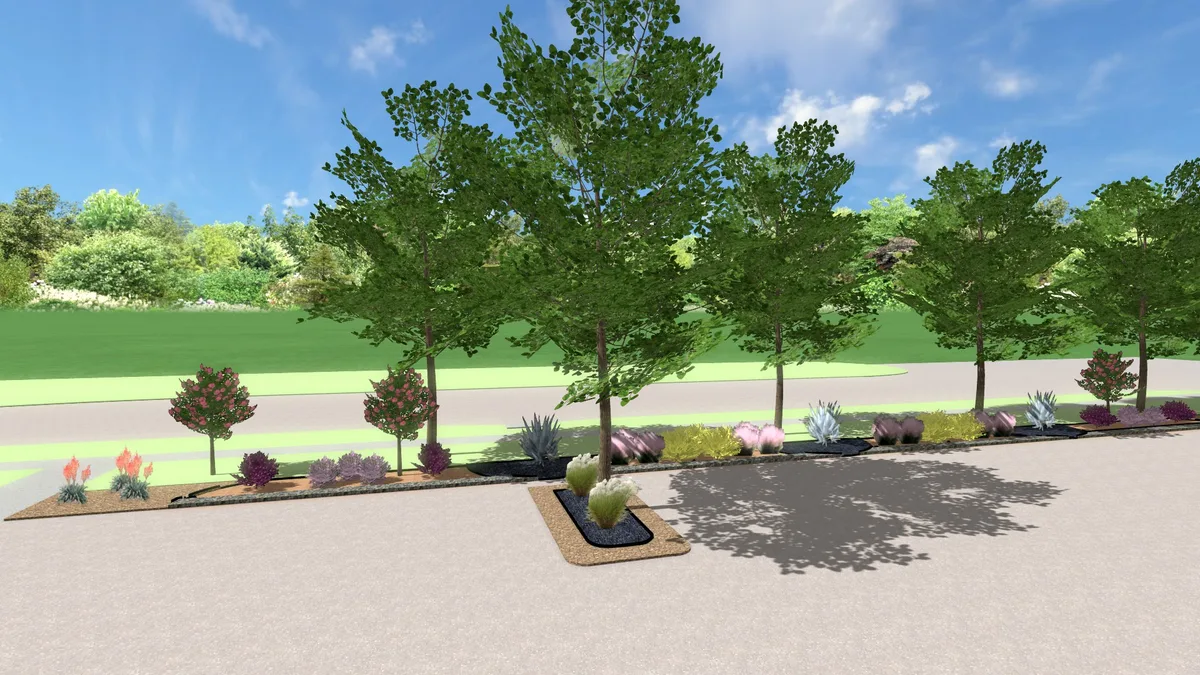
For each proposed project, record the location, problem or purpose, available estimate and decision needed. A repeatedly wet entrance bed might require diagnosis before replanting. A worn sign bed might be an appearance improvement. Those projects should be evaluated on their actual needs rather than placed in one undifferentiated replacement list.
Consider dependencies. Drainage or irrigation work may need to precede planting, while a new display adds ongoing care responsibilities. Request project options that show what is included in each phase. A phase should have a useful result of its own and a clear relationship to any later work.
Make uncertainty and changes visible
Where work is not yet fully scoped, label it as a planning item and identify the assessment needed. Use current proposals for defined projects instead of inventing allowances from a generic price range. Any contingency or funding decision belongs within the board's established budget and approval process.
Record approved changes as they occur, including the affected area and whether the change alters future maintenance. Review actual spending against the agreed categories during the year. If a project is deferred, retain the reason and next decision so it does not disappear when board membership changes.
Prepare a budget discussion the board can use
A useful review packet can be simple: current maintenance scope, recent spending by category, a labeled condition map and a short list of proposed projects. Separate work needed to address a known problem from optional improvements, and explain any unresolved information. This makes the choices easier to discuss with residents and future board members.
Lawn & Landcare can discuss HOA grounds maintenance and separately scoped landscape improvements. Share the community's maintained boundaries, current priorities and available records. We can help define proposed work so the board can compare routine care and project decisions clearly.
Common questions
Should plant replacement be part of the routine maintenance budget?
It may be included in a particular agreement, but do not assume it is. Identify the plants, reason for replacement and related preparation or irrigation work. Record separately scoped replacement projects so their cost and purpose remain clear.
Can an HOA budget use last year's landscape total as the starting figure?
It is a useful reference only after separating recurring work from one-time projects and unusual events. Review the current scope, property condition and known changes before carrying the total forward.
How should the board compare a renovation with continued maintenance?
Define the condition each option addresses and the work required. Maintenance may manage an existing bed, while renovation can change an unsuitable layout or planting. Compare complete scopes and future care needs without assuming a guaranteed financial return.