Start with a realistic seasonal goal
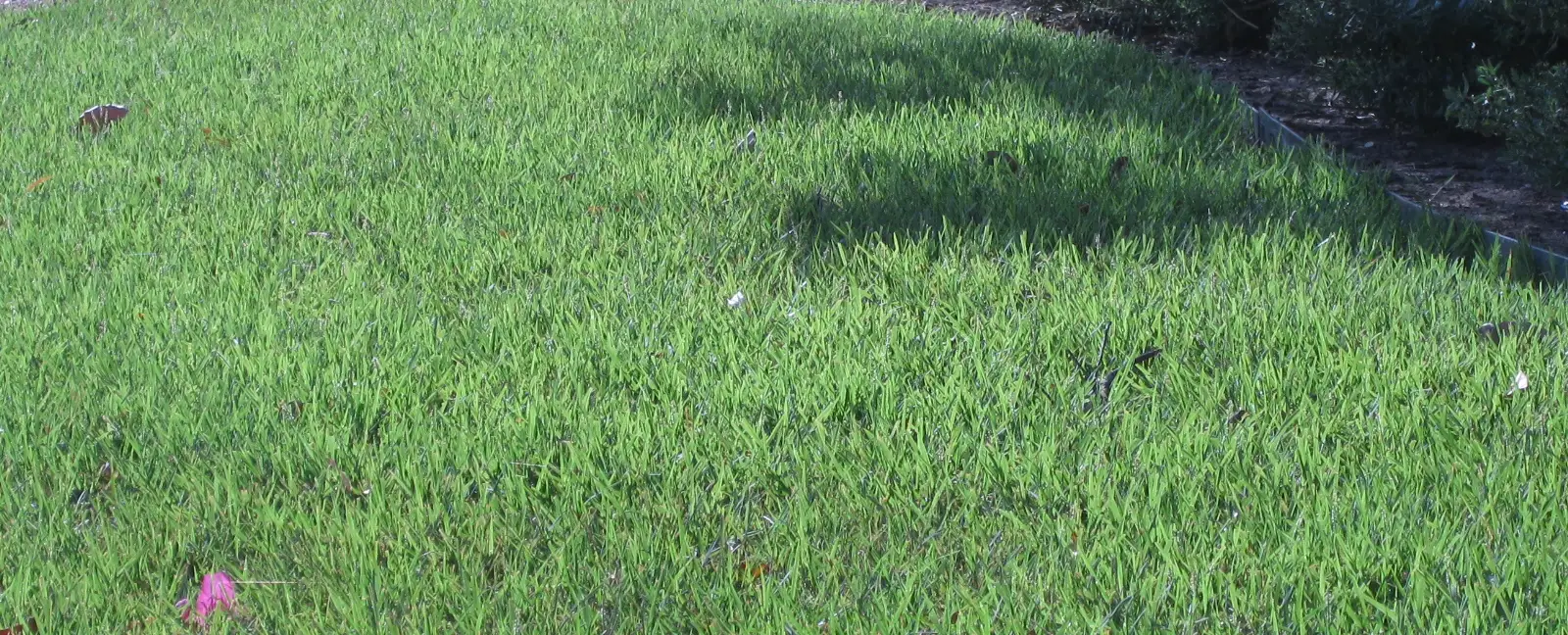
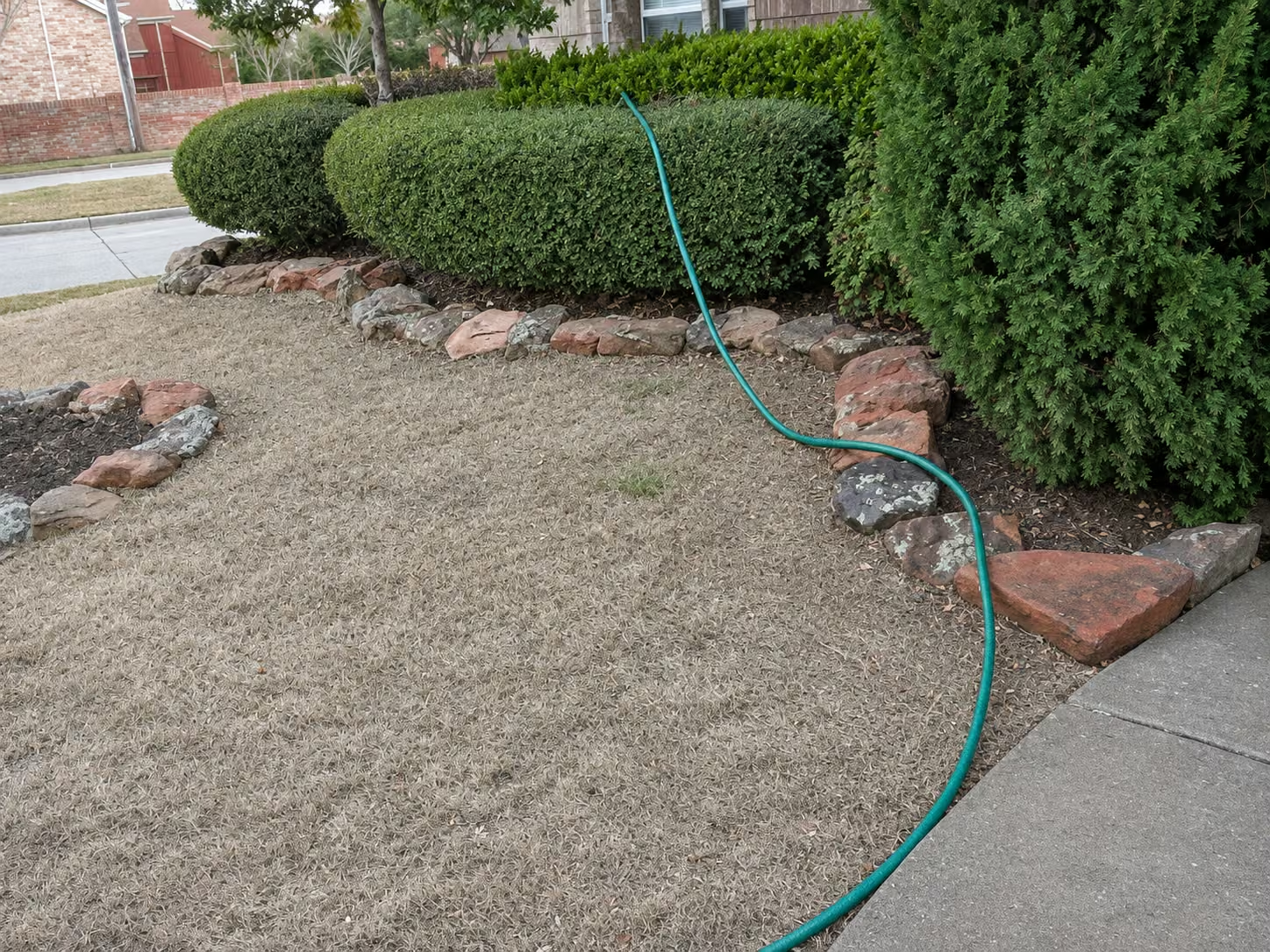
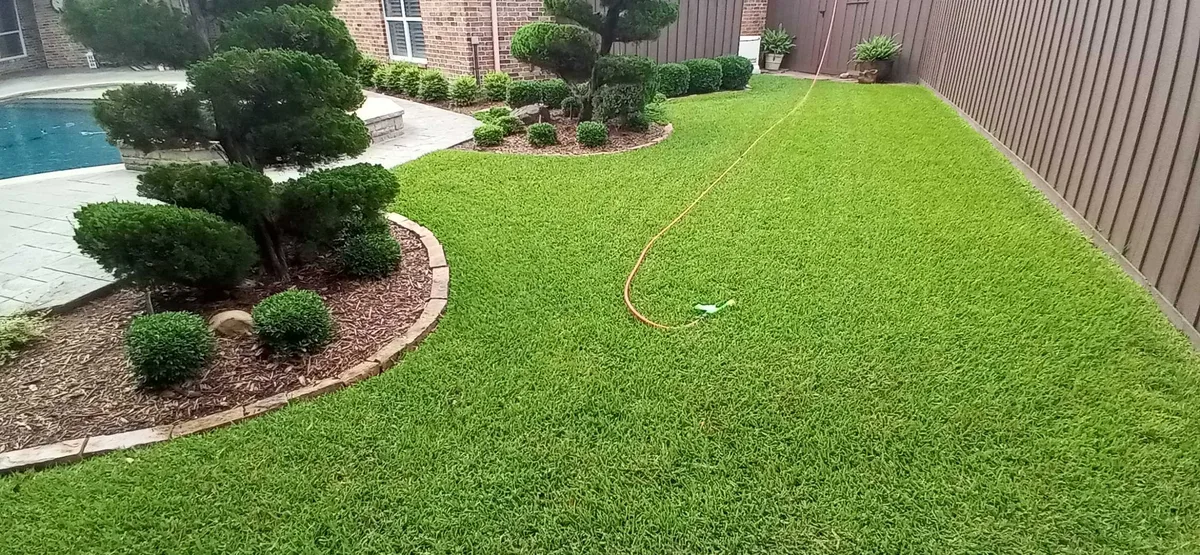
A green lawn depends on grass type, light, moisture and suitable care. Bermuda, St. Augustine and Zoysia are warm-season grasses that commonly lose color during winter dormancy. Normal brown winter color is not a problem that should be corrected automatically with water or fertilizer.
A year-round plan should support the grass during active growth and avoid unnecessary stress during slow periods. No routine can keep every lawn uniformly green through drought, deep shade or extreme cold.
Spring: identify the lawn and assess recovery
As growth returns, look for persistent thin areas and compare them with healthy turf. Check light, drainage, traffic and irrigation before selecting treatment or sod. Do not scalp every lawn to one height or fertilize dormant turf simply because a calendar says spring.
If a bare patch needs replacement, identify the existing grass and cultivar where possible. Generic seed mixes do not match every lawn, and St. Augustine is established vegetatively rather than through a retail lawn seed mix.
Growing season: mow for the grass
Bermuda is usually cut shorter than St. Augustine, but cultivar, equipment and site determine the setting. Mow according to growth and avoid removing more than one-third of green canopy in a cut. Sharp blades help avoid ragged brown tips.
Do not use a lower cut to force deeper roots. Severe cutting can reduce the leaf area needed for growth and expose soil. Avoid heavy equipment on saturated ground and adjust expectations during drought stress.
Water based on need and delivery
Inspect soil moisture and irrigation coverage before increasing run times. A brown patch might reflect a clogged head, disease, insects, shade or dormancy rather than a lack of water. Wet soil and surface runoff are reasons to investigate instead of adding more.
Review seasonal settings and current rules for the property. Water use changes with rain, heat, soil and growth. A single weekly depth or daily routine does not fit all North Texas lawns throughout the year.
Fertilize and treat with a purpose
Use grass type, active growth, soil information and the target problem to guide treatment. More nitrogen does not automatically improve a stressed lawn. Weed and pest identification matter before product choice, and labels determine conditions and precautions.
Lawn & Landcare's lawn program has eight applications. Fire ant, fungal, turf-insect and liquid-aeration work are appropriate add-on discussions rather than automatic treatment for every lawn.
Fall and winter: reduce avoidable stress
Remove heavy leaf accumulations that cover the grass, particularly wet mats that block light. A small quantity of dry leaves may be finely mulched when it can be dispersed without smothering the lawn. Different trees shed at different times, so cleanup often needs more than one pass.
Remove heavy stored objects that shade and press on turf. Reduce repeated traffic on frozen or saturated lawn. Continue mowing only as growth calls for it, with a suitable height rather than the lowest mower setting.
Dormant lawns often need little or no routine irrigation when rainfall is enough. Check after prolonged dry periods and avoid watering during freezing conditions. Do not apply a universal late-fall feeding to promise freeze protection.
Use changes as a reason to investigate
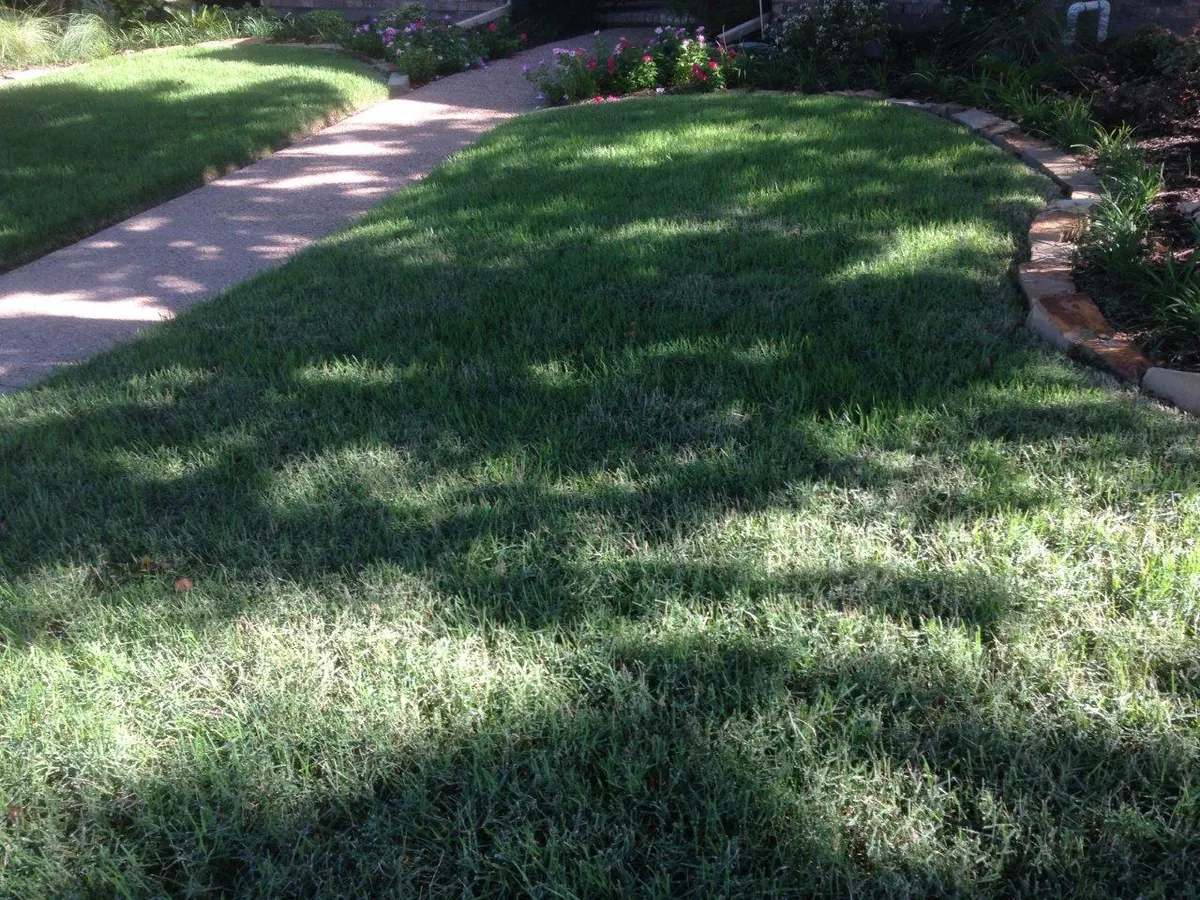
If the lawn stays thin during its growing season, contact Lawn & Landcare with photos and a history of mowing, watering and treatments. We can discuss recurring maintenance, fertilizer and weed control, irrigation concerns or sod where needed. The first decision is what is limiting the grass; the service plan should follow that answer.