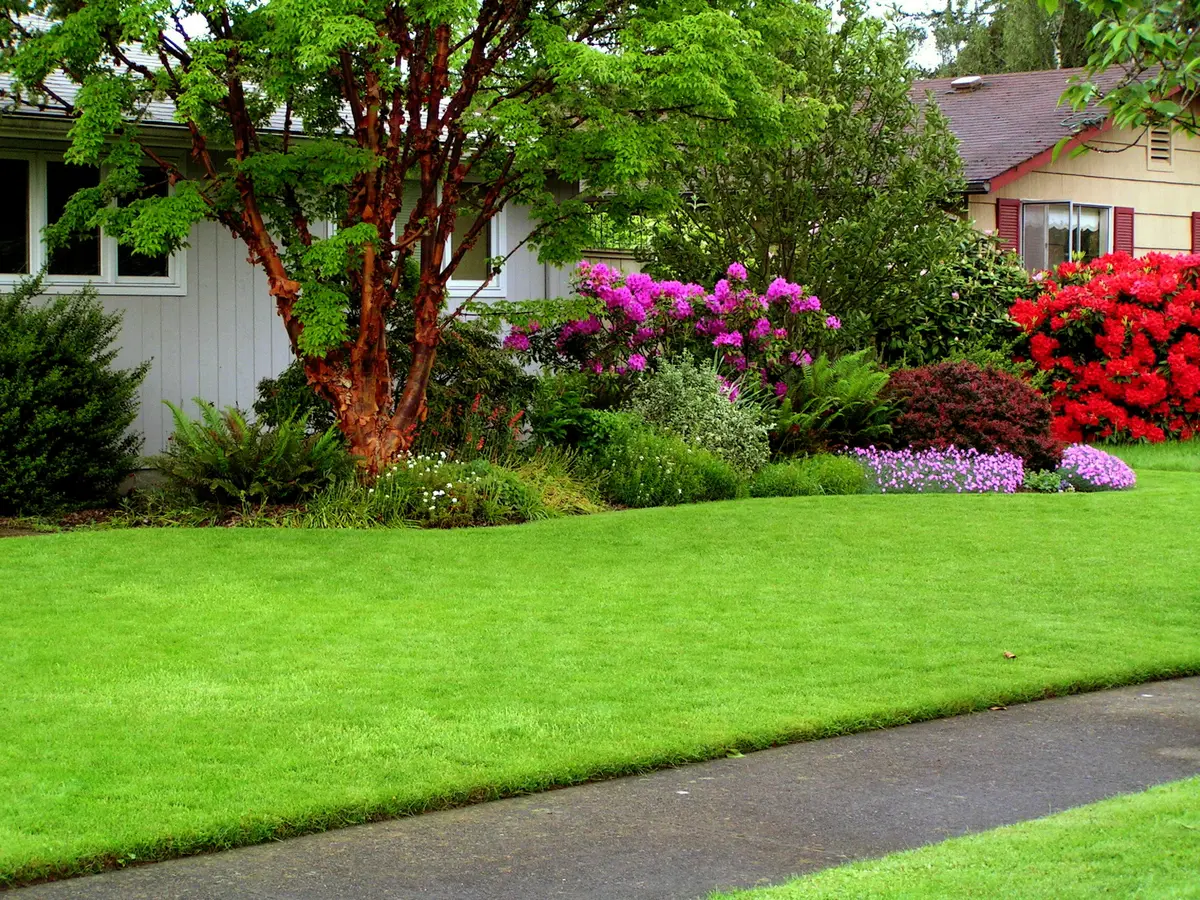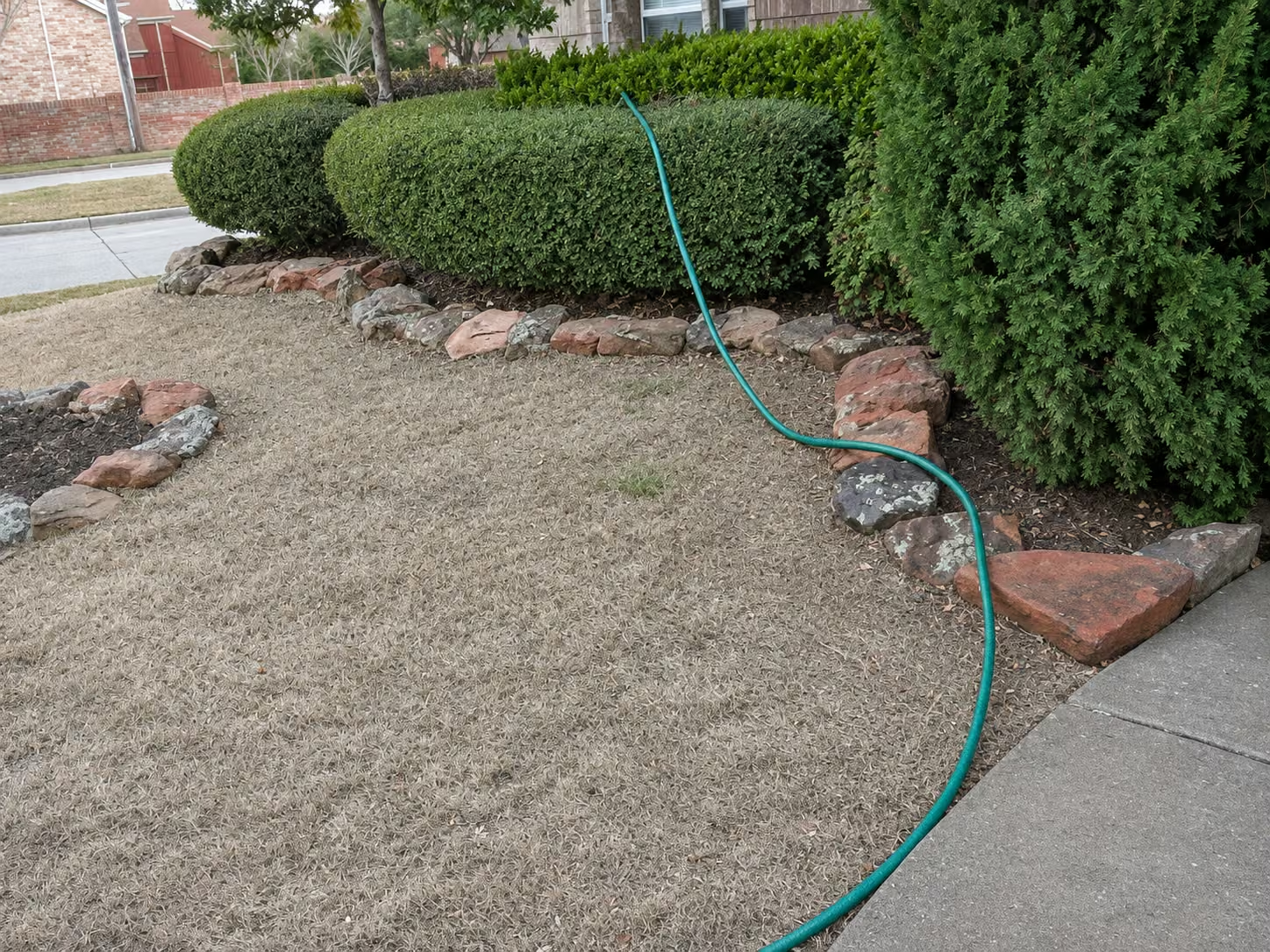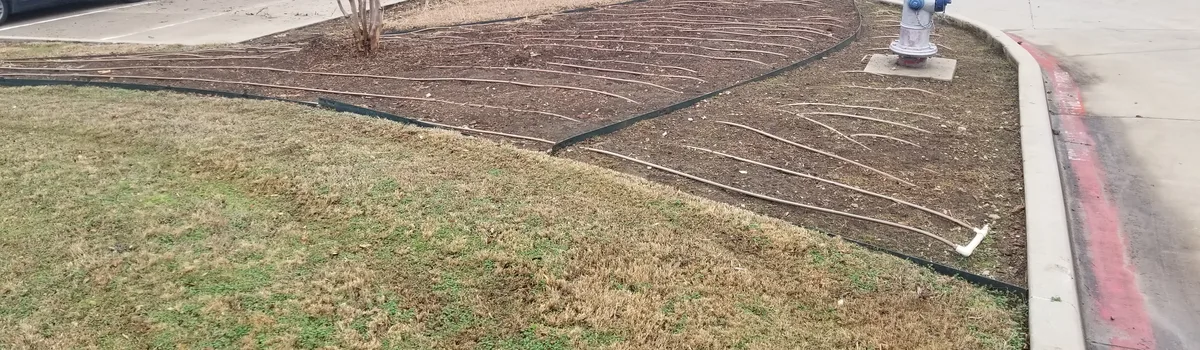
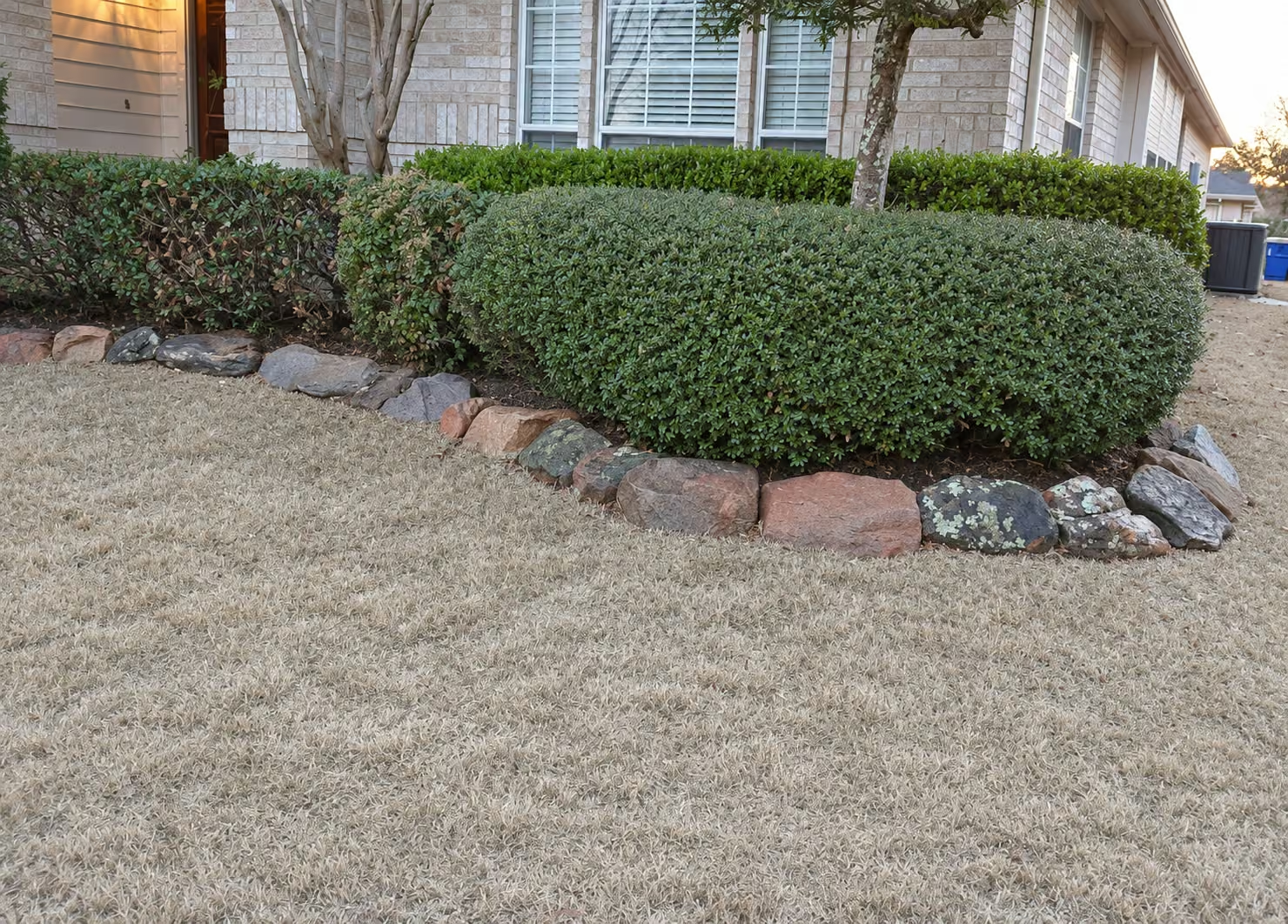
Dormancy is a normal seasonal change
Warm-season North Texas grasses commonly slow down and lose color in cold weather. That does not automatically mean the lawn is dead or needs more fertilizer and water. Winter care aims to avoid unnecessary stress and monitor conditions until active growth returns.
Grass type, site exposure, moisture and the depth and duration of cold influence injury. Inspect after the event rather than assuming the same response on every part of the lawn.
Reconsider winter fertilizer
Do not automatically fertilize dormant turf to force green growth. Nutrient needs depend on the grass, soil information and active growth. A combined weed-and-feed product may have timing and turf restrictions that do not fit the lawn's current needs.
Weed control and fertilization are separate decisions even when a product combines them. Identify weeds and follow the actual label before applying anything.
Manage accumulated leaves
Thick, wet leaf layers can cover turf and block light. Remove or reduce heavy accumulation without tearing the lawn. Dry, small amounts may be finely mulched when conditions and turf health permit; heavy mats need removal.
Keep leaves out of drainage grates and away from areas where runoff carries them into outlets. Cleanup needs may continue as different trees shed at different times.
Reduce traffic and stored objects
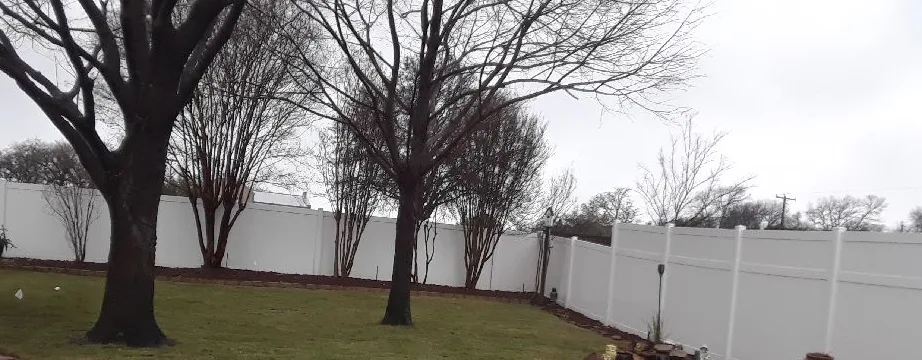
Limit repeated traffic on frosted, frozen or saturated turf. Dormant grass has limited ability to recover from wear. Use suitable established routes and keep equipment off wet ground where it would rut the surface.
Remove furniture, toys and other objects left over the lawn for long periods. Moveable objects can shade and press on grass, especially where growth is already slow. Store them in an appropriate area instead of concentrating them on another vulnerable patch.
Mow only as growth calls for it
Continue appropriate mowing while grass grows, then reduce or suspend as growth slows. Do not lower every lawn to a universal 2.5 inches or the mower's lowest setting. Species, cultivar and condition determine suitable height.
Avoid mowing frozen grass or operating heavy equipment over wet soil. Sharp blades and the one-third rule remain useful when cutting is actually needed.
Check moisture rather than using a daily timer
An established dormant lawn often needs little or no routine winter irrigation when rain is adequate. Inspect after prolonged dry weather, especially on exposed sites. Do not water frozen ground or allow irrigation to create ice on pavement.
New sod and new planting may have separate establishment needs. A summer schedule running through winter is not a substitute for checking them.
Make a seasonal work list
Lawn & Landcare can help with agreed leaf removal, landscape maintenance and irrigation concerns. Describe what changed and where problems occur. Significant thinning or persistent wetness may need a separate assessment before spring renovation is selected.