Start by naming the chores you want to reduce
Low maintenance means different things to different property owners. One person wants less shrub trimming; another wants fewer flower replacements or beds that are easier for a maintenance crew to reach. A useful design brief names those tasks instead of asking for a yard that needs no attention.
List what you enjoy, what you want handled by a service and what you would rather remove from the routine. Keep the desired appearance in the conversation. A neatly defined entrance with a small area of seasonal color may suit you better than simplifying every part of the landscape equally.
Planning a landscape project?
Tell us which part of your property you want to change and how you want to use it.
Discuss your landscape design (214) 293-3793Let the plant's size and natural shape do more of the work
A shrub that fits its space at maturity is easier to accommodate than one repeatedly cut back from a window or walk. Evaluate species and cultivar, expected width, height and growth habit before choosing nursery sizes. Dense initial planting can create a future pruning problem even when it looks full on installation day.
Choose plants for the actual light and moisture conditions. Grouping compatible needs makes care more coherent. A plant described as native or drought tolerant still needs the right location and establishment attention; neither label makes it suitable for every North DFW bed.
Simplify bed shapes and preserve maintenance access
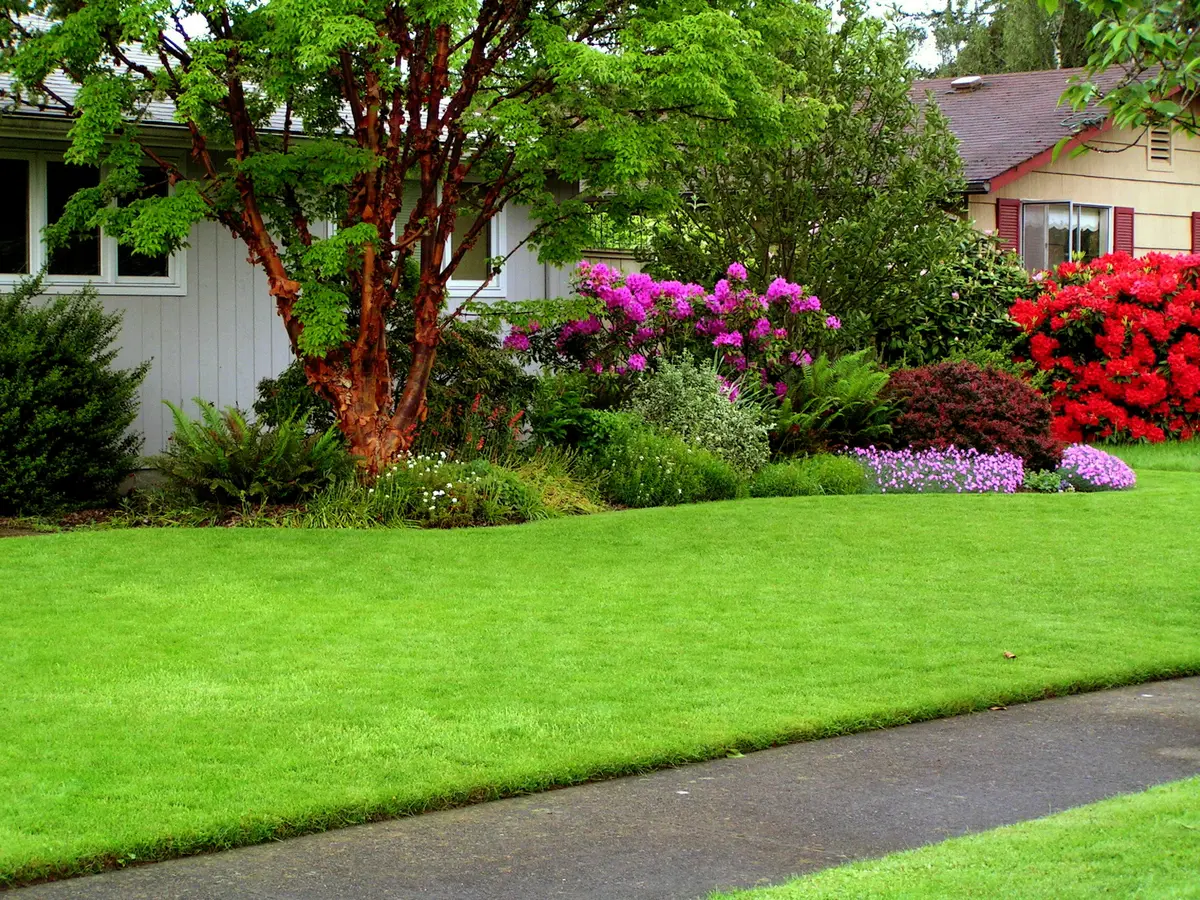
Broad, clear bed outlines are easier to work around than a collection of tight curves and isolated planting pockets. Walk the proposed edge and imagine mowing, trimming and removing leaves. Check the narrow spaces behind shrubs and the route to irrigation equipment.
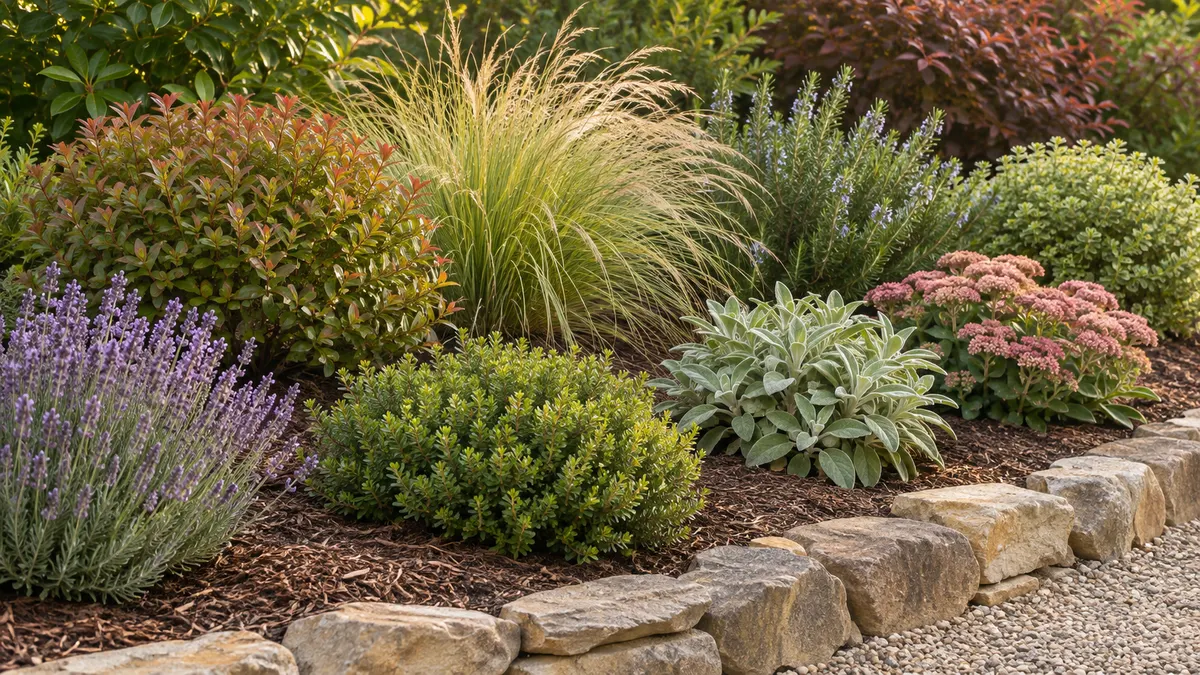
Repeated groups and a restrained material palette can give a landscape a finished appearance without a long list of individual care needs. Simplicity does not require every plant to be identical. Use a few deliberate contrasts in height, texture or seasonal interest where people will notice them.
Compare mulch and stone by their upkeep
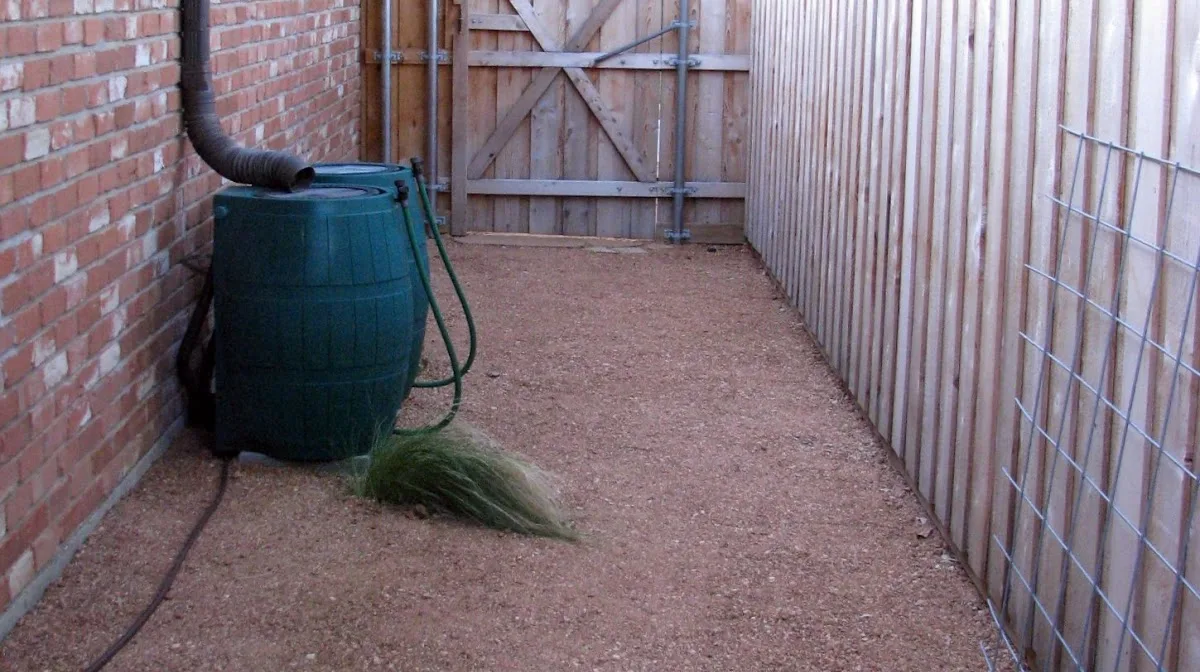
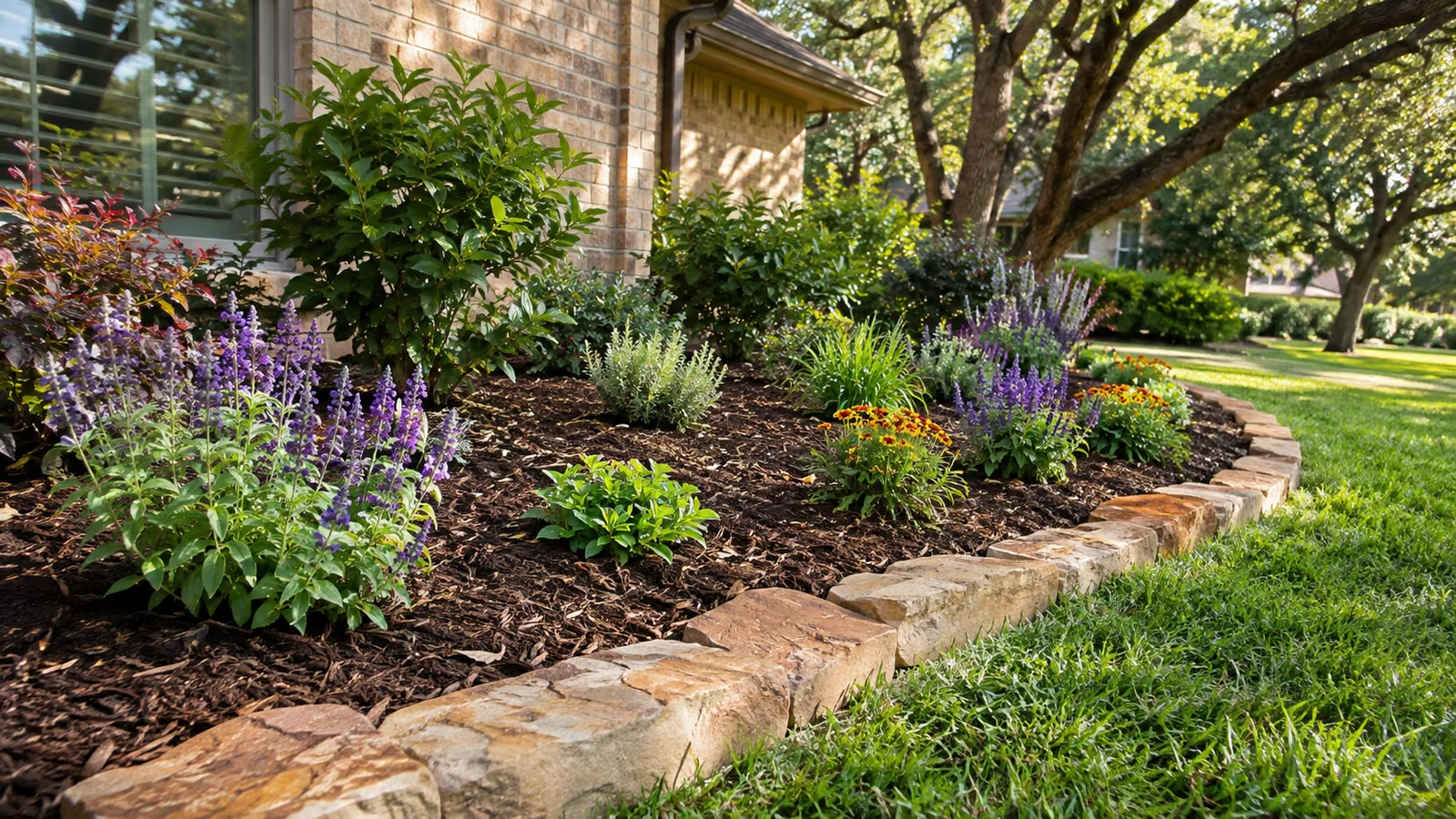
Organic mulch and decorative rock have different maintenance needs. Organic mulch breaks down and needs periodic replenishment. Rock remains longer, but fallen leaves and debris can be awkward to remove, especially beneath shedding trees. Neither choice makes a bed permanently weed-free.
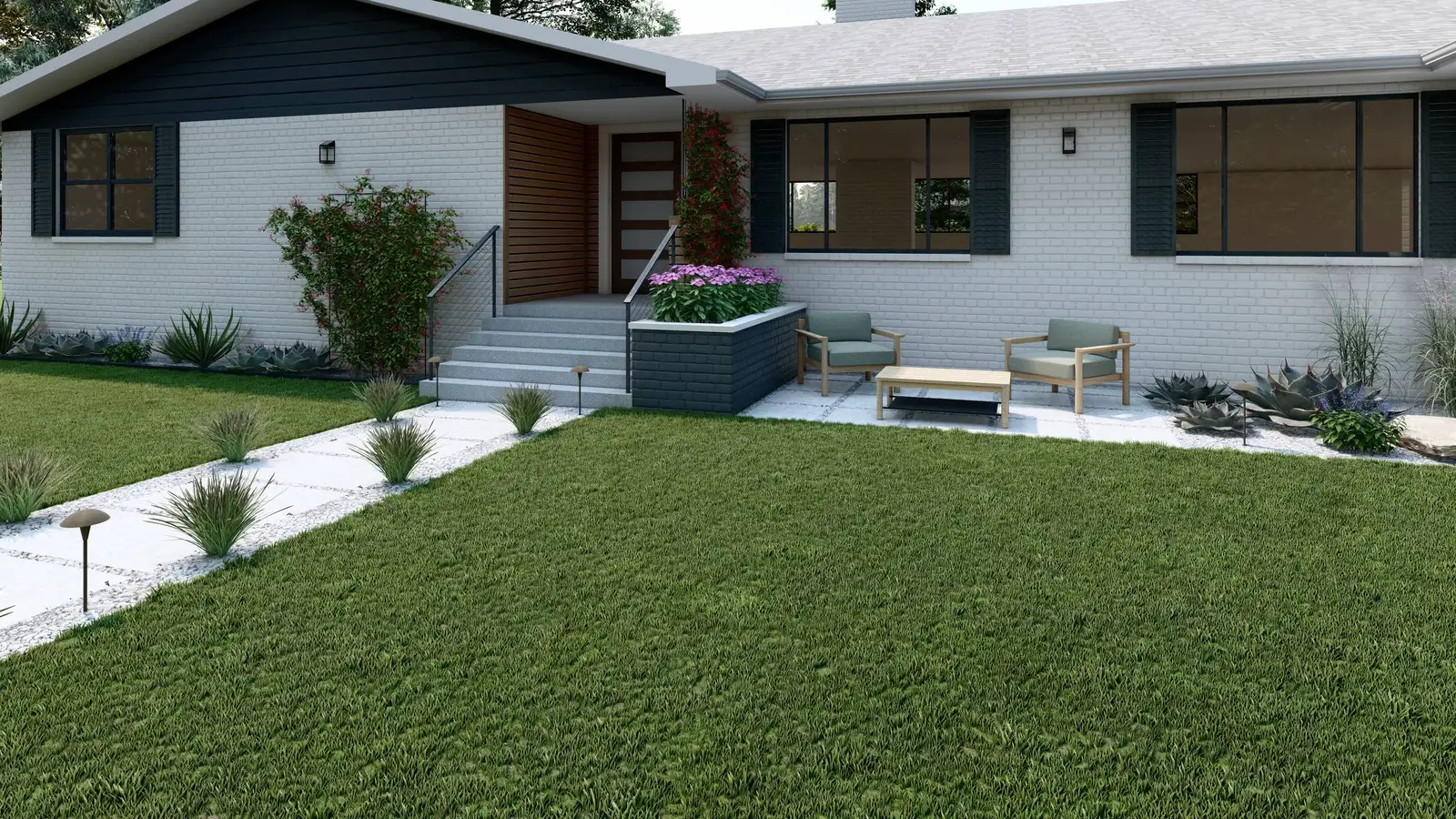
Before choosing river rock or decomposed granite for an area, discuss containment, nearby lawn, drainage and future planting access. Replacing an unwanted lawn strip with another material changes the care tasks; it does not make them disappear. Choose the finish for the use and conditions of that particular space.
Put higher-care features where they earn their place
If you love flowers, reserve a manageable display near the entrance or the outdoor area you use most. Keep larger background beds simpler. This lets you retain color and detail while being realistic about replacement planting, watering and seasonal cleanup.
The same thinking applies to formal shapes. A clipped hedge can suit the architecture when you want that look and arrange its care. Elsewhere, naturally shaped shrubs may better match your priorities. Discuss the maintenance implications of the style before approving the planting plan.
Design the care plan along with the installation
An easier long-term landscape still needs attention while new plants establish. Agree on watering, weed management and the point at which regular maintenance takes over. Ask which tasks remain occasional projects rather than routine visits.
Bring Lawn & Landcare examples of the appearance you like and a short list of the chores you want to change. We can discuss design, planting and recurring maintenance together, so the installation reflects the way you want the property cared for.
An existing bed may need only selective replacement and a clearer edge. Another may need a new layout. The right proposal explains which changes reduce the work you dislike while preserving the features you value.
Common questions
Does low maintenance mean removing all the lawn?
No. Keep lawn where it serves play, pets or other everyday uses. Consider changing awkward or poorly suited areas only after comparing the care and function of the proposed replacement.
Will replacing mulch with rock eliminate weeds?
No. Weeds and debris still need attention in rock areas, and fallen leaves can be difficult to remove. Compare the actual cleanup, containment and planting needs before choosing the material.
Can I keep seasonal flowers in an easier-care landscape?
Yes. Limit them to a deliberate focal area and arrange the needed watering and replacement work. A smaller, well-kept display can provide the color you want without making every bed a seasonal project.