Landscaping
Lawn Care
Irrigation Services
Flower Mound, Lewisville, Frisco, McKinney, Plano, TX & Nearby Texas Areas

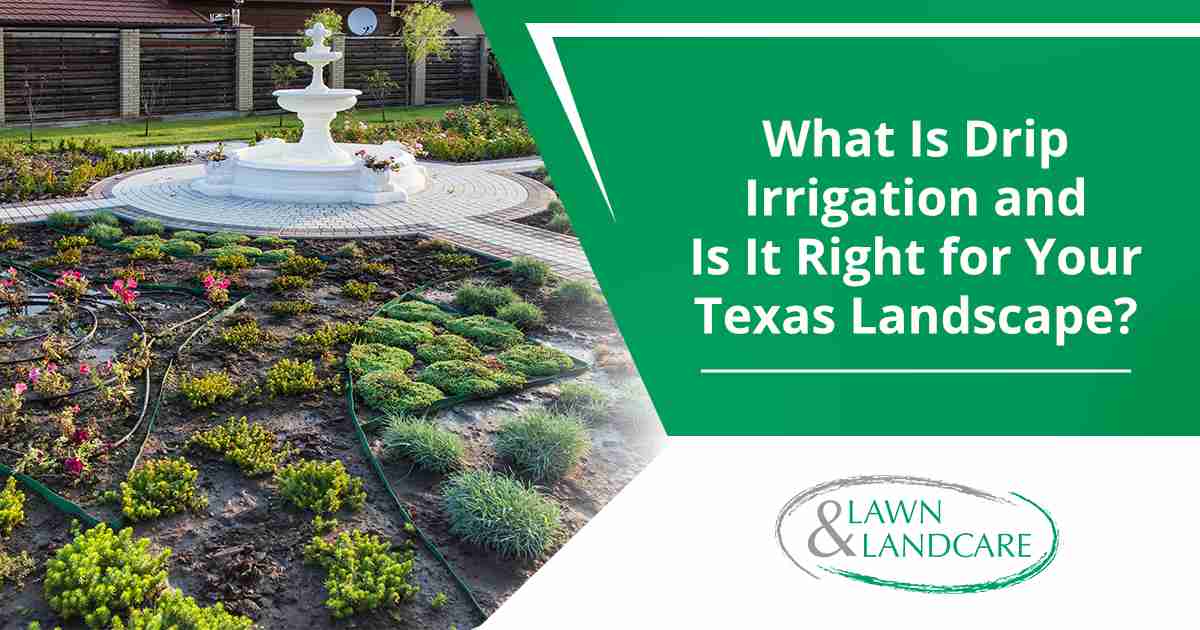
Keeping a Texas landscape healthy can be challenging, especially when long summers, water restrictions, and periods of drought place extra stress on plants. While traditional sprinkler systems remain a popular choice for watering lawns, they are not always the most efficient solution for every part of the landscape. Understanding what drip irrigation is and how it works can help homeowners determine whether it is the right choice for conserving water while supporting healthier plants.
A drip irrigation system delivers water slowly and directly to the root zone where plants need it most. Instead of spraying large areas, it targets individual plants or planting beds, reducing waste and helping landscapes thrive even during North Texas’ hottest months. For many homeowners, understanding how drip irrigation compares to traditional sprinkler systems and where it works best can make it easier to choose the most effective watering solution for their Texas landscape.
Drip irrigation is a method of watering that uses flexible tubing, emitters, and low-pressure delivery to provide a slow, controlled flow of water directly to the soil surrounding plant roots. Rather than soaking an entire area, the system focuses moisture exactly where plants absorb it, helping reduce unnecessary water loss. This targeted approach makes drip irrigation an excellent option for landscapes that require consistent but efficient watering.
A typical drip irrigation system consists of supply tubing connected to small emitters placed near each plant or along planting beds. These emitters release water gradually, allowing the soil to absorb moisture without creating puddles or runoff. By delivering water directly to the root zone, plants receive consistent hydration while minimizing evaporation caused by the Texas sun.
Many systems can also be connected to an irrigation controller that automates watering schedules based on seasonal needs. Homeowners can adjust watering frequency to match weather conditions, helping prevent both underwatering and overwatering. Proper scheduling also encourages stronger root development and healthier landscape growth throughout the year.
Traditional sprinkler systems distribute water through sprinkler heads that spray large sections of turf or landscape at one time. While this method works well for lawns, much of the water can evaporate before reaching the soil, particularly during hot and windy North Texas afternoons. Overspray onto sidewalks, driveways, and streets may also contribute to unnecessary water waste.
Drip irrigation works differently by delivering water slowly and directly to plants instead of broadcasting it across an entire area. Because the water remains close to the soil surface and root zone, evaporation and runoff are significantly reduced. This makes drip irrigation especially effective for flower beds, shrubs, vegetable gardens, and other landscape areas that do not require overhead watering.
| Feature | Drip Irrigation | Traditional Sprinklers |
| Water Delivery | Direct to plant roots | Sprays broad areas |
| Water Efficiency | High | Moderate |
| Evaporation | Minimal | Higher |
| Best For | Beds, shrubs, gardens | Turfgrass lawns |
| Runoff | Low | Can be higher |
Texas landscapes face unique environmental conditions that make efficient irrigation increasingly important. Long periods of heat, clay-heavy soils, and recurring drought conditions can all affect plant health if watering is inconsistent or inefficient. Drip irrigation addresses many of these challenges by delivering water where it provides the greatest benefit.
Summer temperatures in North Texas often accelerate evaporation, making traditional watering methods less efficient. Because drip irrigation applies water directly to the soil, far less moisture is lost to heat and wind before plants can absorb it. This efficiency allows homeowners to make better use of every gallon of water during periods of high demand.
Many municipalities also implement watering restrictions during drought conditions to conserve water supplies. A drip irrigation system supports these conservation efforts by applying water more precisely than conventional sprinklers. Using less water while maintaining healthy plants benefits both homeowners and the environment.
Consistent soil moisture promotes stronger root systems, allowing plants to become more resilient during periods of extreme weather. Since drip irrigation provides a slow, even supply of water, plants experience less stress from cycles of overwatering and drying out. Healthier roots often translate into healthier flowers, shrubs, and ornamental plants.
Reducing runoff also helps preserve valuable nutrients within the soil. Water remains where plants need it instead of washing mulch, fertilizer, or soil away from planting areas. This creates more favorable growing conditions while reducing unnecessary maintenance.
Plants naturally extend their roots toward consistent moisture sources. Because drip irrigation concentrates water at the root zone, roots tend to grow deeper and become better established over time. Deeper root systems often improve a plant’s ability to tolerate drought and temperature fluctuations.
Healthy root development also supports stronger stems, fuller foliage, and improved flowering throughout the growing season. This makes drip irrigation particularly beneficial for landscape investments that homeowners want to protect for years to come. Combined with proper mulch coverage, drip irrigation helps maintain stable soil moisture between watering cycles.
Not every part of a landscape requires the same irrigation method. Understanding where drip irrigation performs best helps homeowners maximize efficiency while maintaining healthy plants.
Garden beds filled with flowers, shrubs, and ornamental plants are among the best candidates for drip irrigation. Individual emitters can be positioned near each plant, ensuring consistent watering without wetting sidewalks or nearby hardscapes. This precision helps maintain attractive planting beds while reducing wasted water.
Foundation plantings also benefit from targeted watering because they often contain shrubs and decorative landscaping with varying moisture needs. Delivering water directly to each plant allows better control than broad sprinkler coverage. Homeowners can also reduce excess moisture near exterior walls by properly designing irrigation zones.
Xeriscaping emphasizes water-efficient landscape design through drought-tolerant plants, mulch, and thoughtful irrigation practices. Drip irrigation complements these landscapes by supplying only the water needed to sustain selected plants. This combination supports attractive outdoor spaces while minimizing overall water consumption.
Native Texas plants often require less supplemental watering once established, making drip irrigation an excellent long-term solution. Efficient watering also helps maintain healthier soil moisture levels without encouraging unnecessary weed growth. Landscapes designed with conservation in mind often perform best when paired with properly planned drip systems.
Although drip irrigation offers many advantages, it is not the ideal solution for every landscape. Large turfgrass lawns generally require broad, even coverage that traditional sprinkler systems provide more effectively. Attempting to irrigate expansive lawns solely with drip tubing may not produce consistent results.
Many residential properties benefit from combining both irrigation methods. Sprinklers can efficiently water lawn areas, while drip irrigation serves flower beds, shrubs, trees, and garden spaces. Using each system where it performs best creates a balanced and highly efficient irrigation strategy.
Choosing the right irrigation system depends on several factors unique to each landscape. Plant types, soil conditions, property layout, and water conservation goals all influence whether drip irrigation is the best fit.
Homeowners with extensive planting beds, decorative landscaping, vegetable gardens, or drought-tolerant plants often see the greatest benefits from drip irrigation. Landscapes with slopes may also experience less runoff because water is applied gradually instead of all at once. The ability to control watering by irrigation zone further improves efficiency.
Soil type also plays an important role. North Texas clay soils absorb water slowly, making gradual watering especially beneficial for minimizing runoff. Proper system design ensures moisture penetrates deeply enough to support healthy root development.
Many existing irrigation systems can be modified to include drip irrigation zones. Separate zones allow different watering schedules for lawns, flower beds, shrubs, and gardens based on each area’s specific needs. This flexibility creates a more customized watering plan without replacing the entire irrigation system.
Professional evaluation helps determine the most effective way to integrate drip irrigation into an existing setup. Proper pressure regulation, filtration, and zoning ensure the system performs efficiently over time. A well-designed upgrade can improve both water conservation and overall landscape health.
Many homeowners assume drip irrigation only works for vegetable gardens or requires replacing an existing sprinkler system. In reality, drip irrigation can often be integrated into existing irrigation systems and customized for flower beds, shrubs, foundation plantings, and other landscape areas. Understanding these options helps homeowners choose the most effective watering strategy for their property.
Some people also believe drip irrigation requires constant attention or frequent repairs. While routine inspections and occasional emitter cleaning are important, a properly designed system is generally low maintenance and can provide reliable performance for many years. Professional installation further helps ensure the system operates efficiently with minimal upkeep.
Like any irrigation system, drip irrigation performs best when properly installed and maintained. Understanding what is involved helps homeowners make informed decisions about long-term landscape care.
Installing a drip irrigation system involves more than placing tubing throughout planting beds. Proper system design considers water pressure, emitter placement, irrigation zones, soil conditions, and plant spacing to ensure even water distribution. Careful planning helps maximize efficiency while minimizing future adjustments.
Professional installation also reduces the likelihood of leaks, uneven watering, or pressure problems that could affect system performance. Designing the system around the landscape’s specific needs creates better long-term results. An experienced irrigation professional can recommend the most effective configuration for each property.
Many modern drip irrigation systems can also be paired with smart irrigation controllers that automatically adjust watering schedules based on weather conditions and seasonal changes. These controllers help prevent unnecessary watering after rainfall while ensuring plants continue receiving adequate moisture during periods of extreme heat. Combining drip irrigation with smart technology can further improve water conservation and overall landscape efficiency.
Routine inspections help keep drip irrigation operating efficiently throughout the year. Emitters should be checked periodically for clogs, tubing should be inspected for leaks, and filters should be cleaned as recommended by the manufacturer. Seasonal adjustments may also be necessary to account for changing weather conditions.
In addition to inspecting emitters and tubing, homeowners should periodically flush the irrigation lines to remove sediment that could restrict water flow. Checking tubing for sun exposure, accidental damage from landscaping equipment, and clogged emitters helps maintain even water distribution throughout the system. These simple maintenance tasks help maximize efficiency while extending the system’s lifespan.
Preventive maintenance helps identify small issues before they become larger repairs. Regular system evaluations also ensure plants continue receiving the appropriate amount of water as landscapes mature. Keeping the system in good condition helps extend its lifespan while maintaining consistent performance.
The initial investment for drip irrigation varies depending on landscape size, plant density, and system complexity. While installation costs may be higher than some basic watering methods, many homeowners appreciate the long-term value created through improved water efficiency. Lower water usage can contribute to ongoing savings while supporting healthier landscapes.
Efficient irrigation may also reduce plant replacement costs by providing more consistent moisture throughout the growing season. Healthy plants are often better equipped to withstand periods of drought and extreme heat. Over time, these benefits can outweigh the initial installation investment.
A professionally designed irrigation system considers far more than simply delivering water to plants. Proper pressure regulation, irrigation zoning, seasonal adjustments, and ongoing maintenance all contribute to long-term performance and water efficiency. Experienced professionals can also recommend when drip irrigation, traditional sprinklers, or a combination of both will provide the best results for a property’s unique landscape.
If you are considering ways to improve water conservation while maintaining a healthy landscape, professional irrigation services can help evaluate your property’s needs and recommend the most efficient solution. Expert design, installation, repairs, and routine inspections ensure every component works together to support healthier plants while making the most of every drop of water.
Choosing the right irrigation system can improve landscape health, reduce water waste, and simplify long-term maintenance. A professional irrigation evaluation can help determine whether drip irrigation, a traditional sprinkler system, or a combination of both is the best fit for your Texas landscape. With the right solution in place, you can protect your landscape investment while improving water efficiency throughout the year.