Adjust the plan as growth slows
Fall is a good time to review what the lawn needs before growth slows: leaves may begin accumulating, irrigation demand changes and thin areas become easier to notice. Some tasks are useful immediately, while disruptive renovation or treatment may need a different window.
Fall care should follow the lawn's condition, not a list of products applied to every property. North Texas warm-season turf commonly slows before dormancy. Use these eight checks to decide what needs attention and what can wait.
1. Keep an appropriate mowing height
Do not set the mower to its lowest setting for the final cut. Bermuda and St. Augustine need different settings, with cultivar and equipment also important. Continue suitable mowing while growth calls for it and avoid removing more than one-third of the green canopy at once.
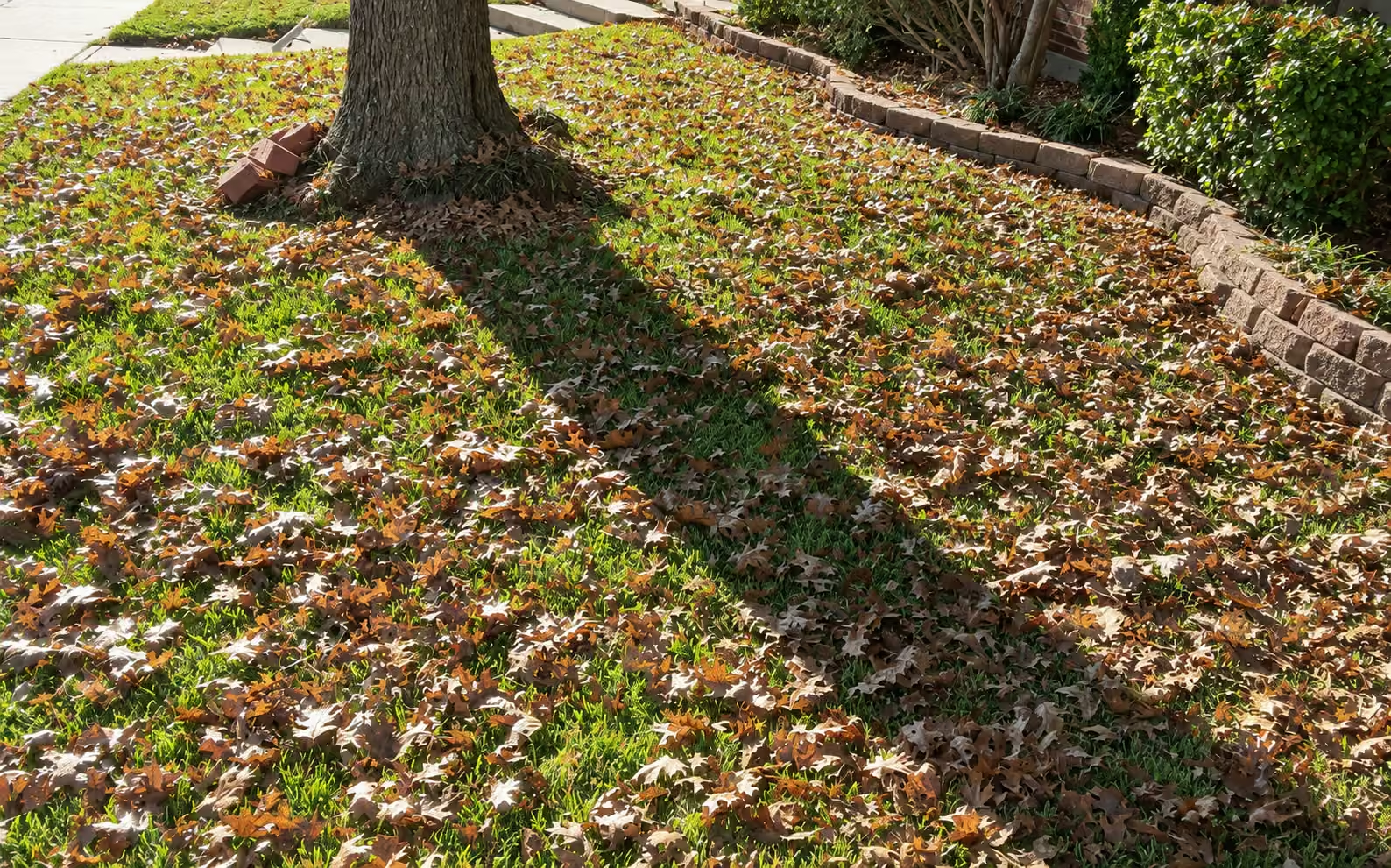
2. Remove heavy leaf accumulation
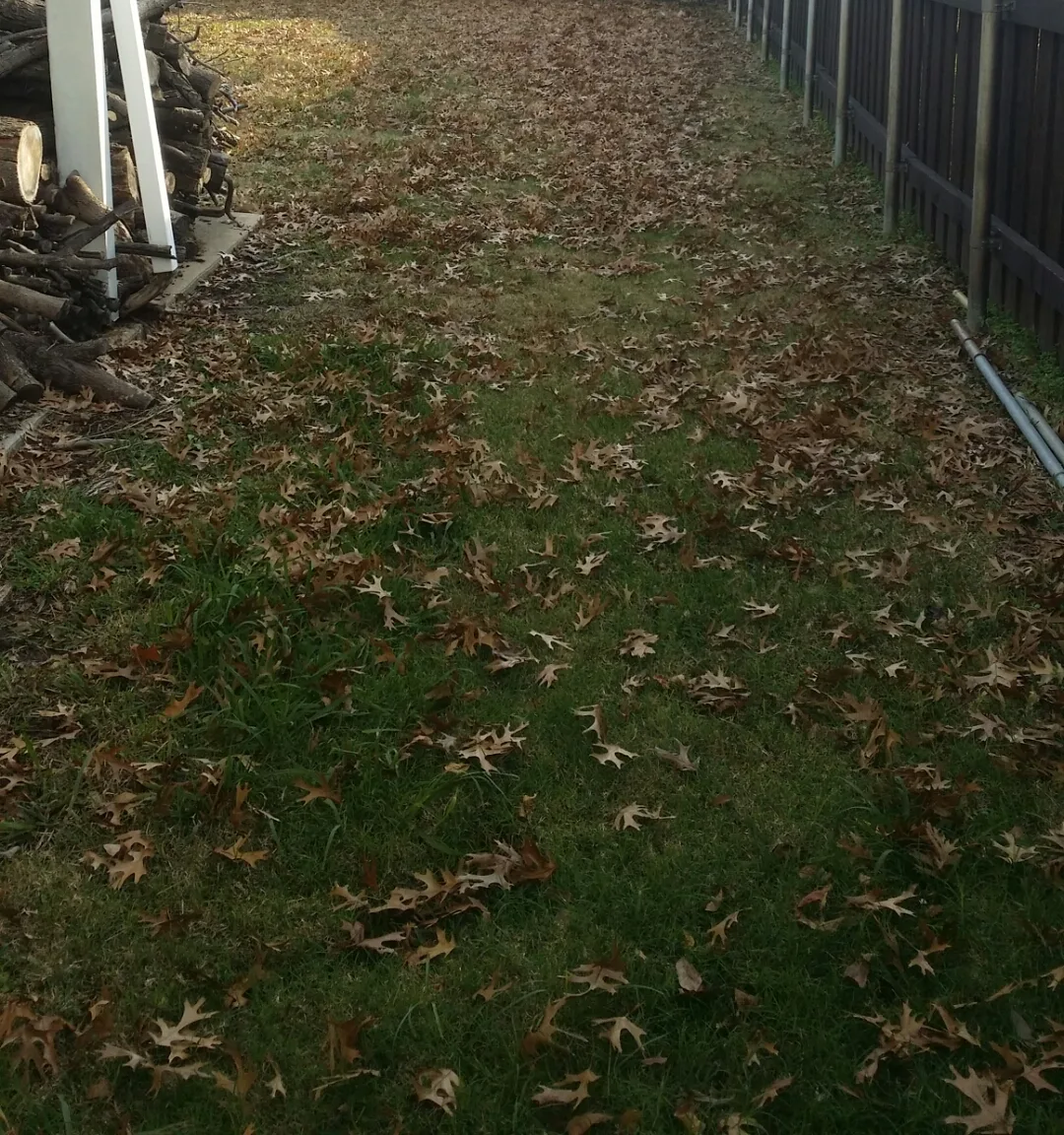
Thick layers can cover grass and hold moisture. Clear heavy mats, especially where wet leaves remain on turf or obstruct drainage. Leaf removal may need to continue as different trees shed; a single cleanup may not finish the season.
3. Mulch leaves only when suitable
A small amount of dry leaves may be finely chopped and distributed rather than removed. Do not leave thick clumps covering the lawn. The quantity, moisture and turf condition determine whether mulching is practical. Diseased or infested material can require different handling.
4. Reassess water
Do not assume fall rain is always adequate or continue a summer schedule unchanged. Check soil moisture, rainfall and the grass's growth. Established dormant lawn often needs little or no routine winter irrigation when rain is sufficient. Avoid frozen ground and conditions that create ice.
5. Diagnose bare spots
Shade, traffic, insects, disease, water and mowing can cause thinning. Identify the cause before buying patch seed or sod. St. Augustine and many hybrid Bermuda lawns cannot be repaired with an arbitrary seed mixture. Consider recovery time before cold weather when planning warm-season turf work.
6. Treat only for an identified need
Fertilizer does not form a protective cover against freezing. Base nutrient timing on grass, growth and soil information rather than a blanket middle- or late-fall application. Identify weeds and use current product directions for the target and turf.
A weed-control decision may not share the correct timing for nitrogen fertilizer. Do not assume a combined product is the right choice for both.
7. Investigate soil and thatch concerns
Compaction and drainage deserve assessment rather than an automatic annual treatment. Thatch is not simply accumulated mowing clippings. Liquid products and core aeration have different mechanisms and should not be described as equivalent.
Lawn & Landcare offers liquid aeration as an appropriate add-on and does not offer mechanical aeration. A liquid treatment should not be promised to restructure clay, remove thatch or create drainage where no outlet exists.
8. Time work around actual conditions
Wet soil, drought stress, freezes and slow turf growth affect what work makes sense. Plan cleanup and any repairs early enough to understand the scope, but do not schedule treatments solely for convenience. Keep a record of symptoms and previous applications.
Arrange the right help
Need help with leaf removal, bed cleanup or routine lawn care this fall? Lawn & Landcare can discuss that work alongside the eight-application fertilizer and weed-control program and any separate repairs. Share the areas that need attention and whether you want a one-time cleanup or continuing maintenance.